Historical illustrations restored from the original site. The large growth animation and high-resolution video are intentionally omitted.
Historical essay; original writing date unknown. Local editorial curation: October 21, 2026. The narrative below preserves the author’s conceptual exploration.
Historical exploratory essay — qualification added October 20, 2026. This essay records an early conceptual interpretation of number patterns. Its terms “holographic,” “ternary computer,” “logic gates” and “distributed memory” are analogies and proposals, not demonstrated properties of a working computer or a validated physical model. The article supplies no defined computational architecture, gate construction, memory mechanism or measured application result. Visual motifs and repeated patterns alone do not establish those capabilities. For the current mathematical definitions, see Learn (https://nsquares.org/learn.html); for established results, evidence categories and open questions, see Research (https://nsquares.org/research.html). This historical essay does not reopen the parked computing or physics research lanes.
Abstract
This historical essay records conceptual interpretations of modular number patterns. Its holographic and ternary-computing vocabulary is an analogy, not demonstrated computational architecture or validated physics.
1. Introduction
The author approached numbers as more than abstract labels: in this historical interpretation, they appeared as generative entities, born in sequence and cascading into patterns.
The author described Naglich Squares as arising from counting and interpreted their growing patterns as suggestive of computation. This was the essay’s philosophical premise.
The essay traces number cascades and two-dimensional lattices, then records a historical computing analogy.
2. From Nothing to Infinity
2.1 The Emergence of One
In the void of nothingness, the first distinction appears: one. One is presence itself, the first unit of existence, and the first separation from the absence of all things.
2.2 The Division into Two
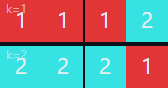
From one arises two: the first contrast, the recognition of difference. Two embodies duality — light and dark, presence and absence, on and off. With two comes the concept of relation.
2.3 The Arrival of Three
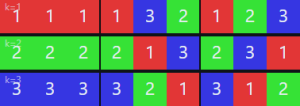
With three, the author associated sequence and possibility: beginning, middle, end; past, present, future. The essay used ternary states — “on,” “off,” and “both” — as interpretive labels.
2.4 Cascading Expansion

From here, the sequence continues without end. Each new integer is not merely added but arises through the cascade of those before it, layering order upon order, creating a recursive ladder to infinity.
3. Number Cascades
3.1 Ordered Sequences
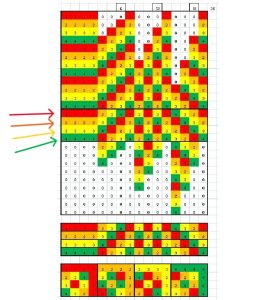
The cascade of numbers creates 1D sequences. These are not arbitrary lists but ordered flows: recursive, cyclic, and self-consistent.
3.2 Relationships and Symmetries
Within cascades, symmetry and mirroring emerge. Forward and backward motions create paired balances. Periodicity reveals itself, with cycles repeating at characteristic intervals tied to N.
3.3 Cascades as Proto-Memory
A cascade may be described metaphorically as a line of memory; this does not construct a storage mechanism or establish computational memory.
4. Naglich Squares
4.1 From 1D to 2D
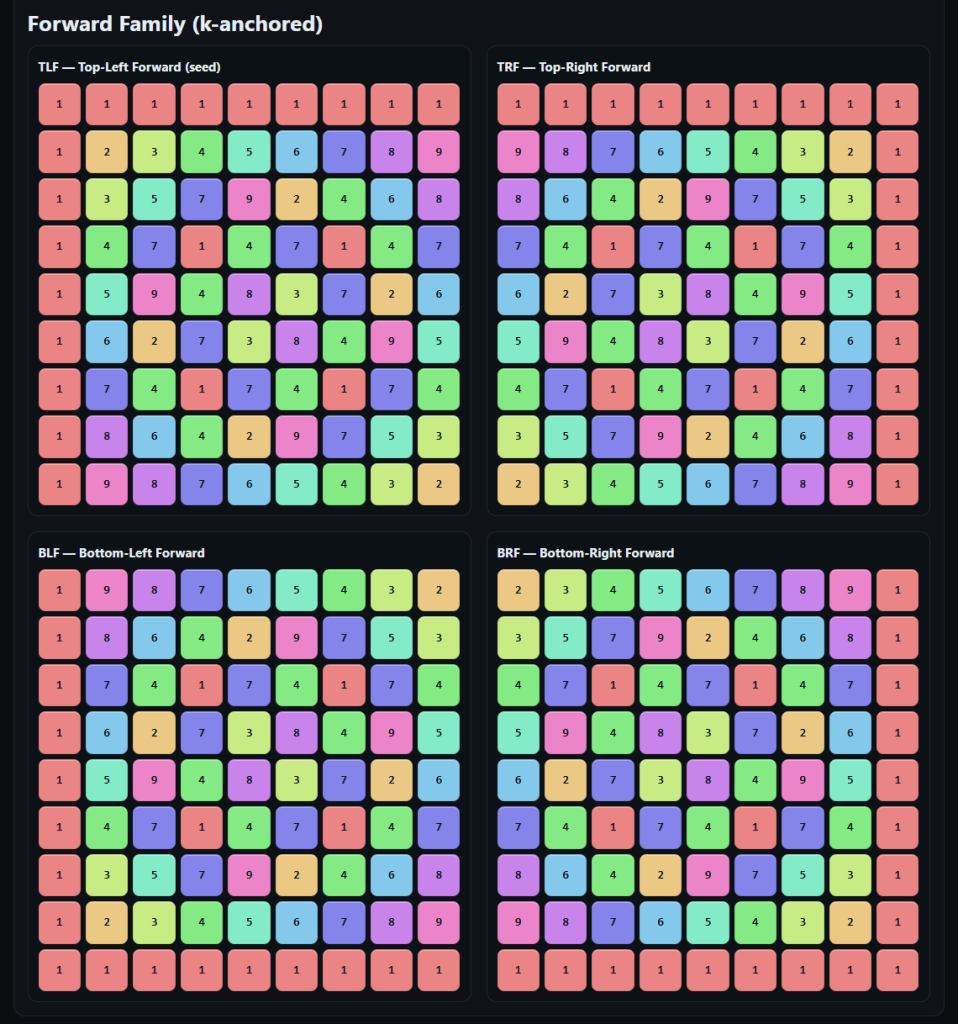
When cascades are extended into two dimensions, they form lattices known as Naglich Squares. Each square is generated by a chosen dimension N and a generative phase k.
4.2 Properties of the Squares
Structured Lattices: Rows and columns interlock with exact order.
Recursive Symmetry: Patterns mirror and reflect across axes.
Scale-Dependent Complexity: The author described some larger N views as “fractal-like” or nested. This records a visual interpretation, not an established fractal or scaling result.
4.3 Opening Windows
The author used a window into the cascade as a metaphor for the expanded view at larger N.
5. The Historical Ternary Interpretation

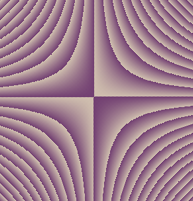
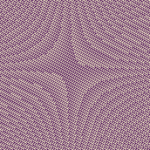
The author called certain visual clusters ternary stars and assigned three descriptive labels: “on,” “off,” and “both.”
The author interpreted changes in these motifs across k as a natural ternary progression, echoing the essay’s transition from two to three. Those labels were a reading of the imagery, not a defined ternary state system or a constructed logic operation.
6. Toward a Holographic Ternary Computer
6.1 Holographic Nature
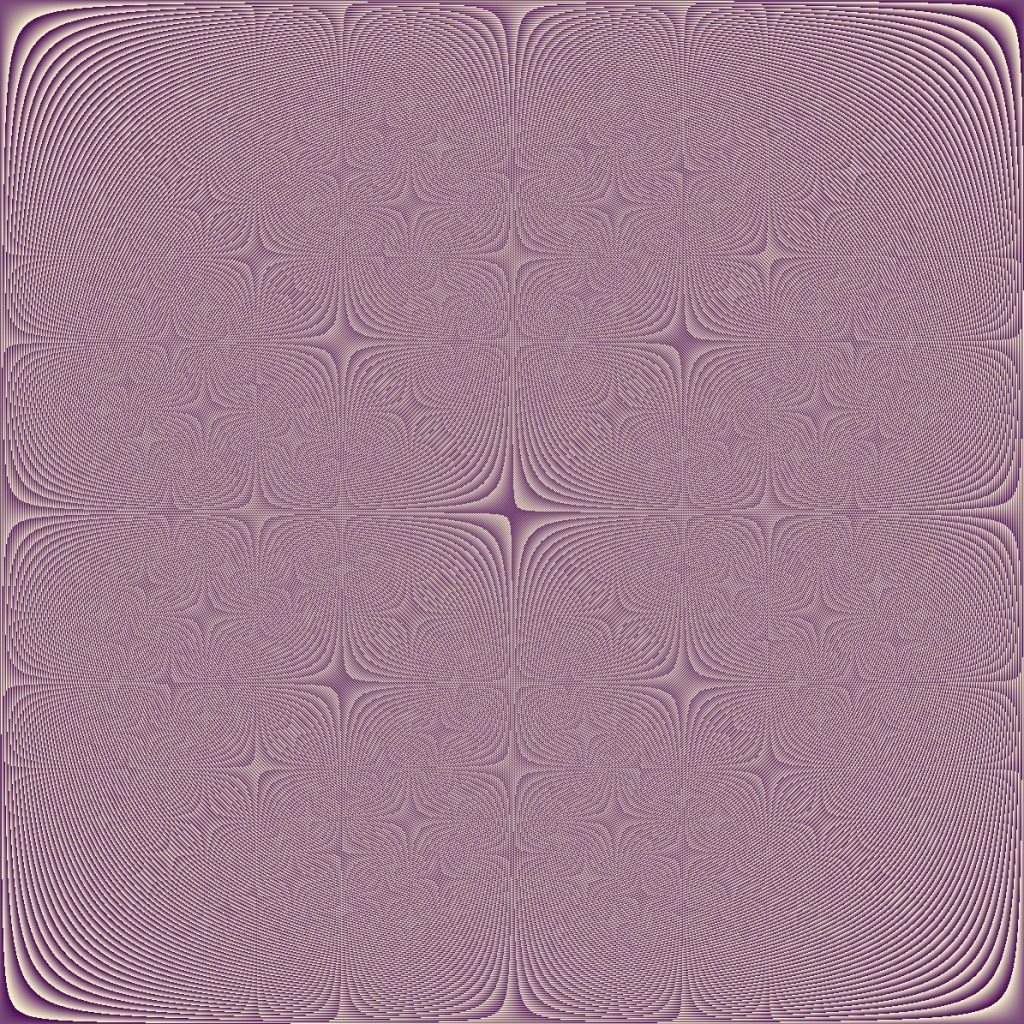
The following historical motifs motivated a holographic analogy; they are not validation of holography or a physical model:
The author imagined each part as reflecting the whole.
The author described perceived recurrence across scales.
The author interpreted symmetry as connecting regions of the lattice.
6.2 The Computer Within Number
Repeated patterns and ternary labels motivated comparisons with computation, gates and distributed memory. Those comparisons do not establish implementations of those capabilities.
6.3 Conceptual Leap
These perceived patterns motivated the author’s historical computing analogy.
7. Discussion
The essay proposed a philosophical reinterpretation of number:
The author viewed numbers as active generators rather than passive descriptors.
Cascades motivated a historical memory analogy; no storage mechanism is demonstrated.
Grids motivated historical computation and holography analogies; no working computer or physical model is demonstrated.
The universe of number, viewed in this way, is not static but alive with structure, unfolding into infinity.
8. Conclusion
Naglich Squares provide modular arithmetic patterns that motivated this historical narrative. Visual motifs do not establish holographic computation.
This essay is retained as historical exploration; the associated research lanes remain parked.